
From DeepTech to the Silk Road: where Chinese venture capital sees its next opportunities

As part of the Kazakhstan-China & Hong Kong Innovation Bridge, an event organized by Khan Tengri Innovation Hub, The Tech spoke with Thomas G. Tao, Co-founder and Chairman of Gobi Partners, about the changing landscape of Chinese venture capital, the growing focus on DeepTech, and the opportunities he sees in Central Asia and Kazakhstan.
Thomas G. Tao, Co-founder and Chairman of Gobi Partners
Gobi Partners is an Asia-focused venture capital firm founded in 2002. The firm will celebrate its 25th anniversary next year. Today, Gobi operates across 18 locations in Asia, manages more than $2 billion in assets and has a portfolio of more than 400 startups across the region. To date, the firm has recorded 76 exits.
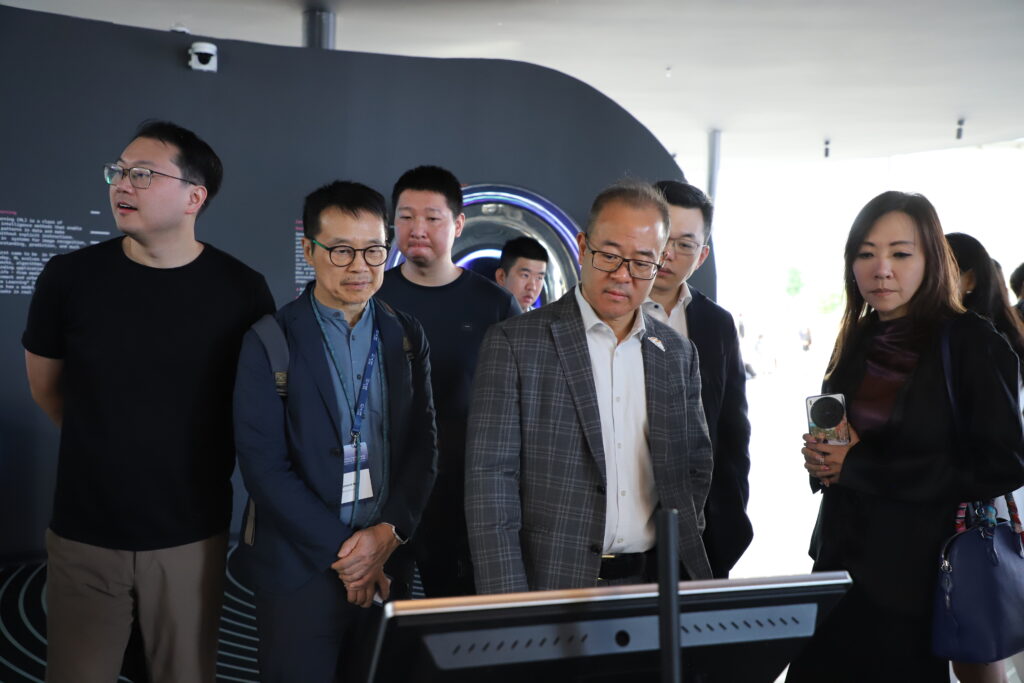
Where Chinese investors are looking
We have seen a significant shift in the Chinese venture capital market over the past two decades.
When Gobi was established in 2002, the market was very different. Today, we are clearly seeing a move away from consumer applications, including areas such as bike-sharing, toward DeepTech innovation. This is also where Gobi has particular expertise and where we see significant opportunities.
If you want to invest in DeepTech, you have to work closely with universities. Gobi has a dedicated fund called the Gobi United Fund. We are fortunate to work with two of Hong Kong’s leading universities, the University of Hong Kong and Hong Kong University of Science and Technology, and we are preparing to onboard two more. One of our strategic partners in this fund is the Hong Kong Investment Corporation, which is also represented on this delegation. So I think DeepTech is where Chinese venture capital is increasingly focused.
There are several areas we are particularly interested in, with portfolio companies already developing solutions in these fields.
The first is SpaceTech and remote sensing. One of our portfolio companies, Stellaris, has developed technology for detecting carbon dioxide and methane emissions from space. Its remote sensing technology was selected and installed on Tiangong, China’s space station.
Stellaris was spun out of HKUST. Its founder is also a great example of what is sometimes described as reverse brain drain. She previously worked at NASA before returning to Hong Kong to establish her own company.
The second area is construction technology and digital twins. If you look at the scale of construction in Kazakhstan, particularly in Astana, there is significant potential to digitize the industry.
Blueprints used to be created on paper. But what happens in an emergency? Government officials need immediate access to accurate information. Digitized blueprints and digital twins can create a much more efficient way of planning, monitoring and making decisions.
One of the companies we have brought here is Izbeam, which focuses on exactly this area. The company has already been highly successful, with thousands of projects around the world.
The third area is smart cities. I know Astana has grown very rapidly, from around 200 000 people to approximately 1.6 million. During our visit, we also experienced some of the city’s traffic congestion. The question is how to optimize existing infrastructure as cities continue to grow. We have a company called RushOwl, which has developed an intelligent operating system for buses. It can be used to optimize bus routes, school bus pickups and employee transportation.
For example, large companies may have thousands of employees commuting to work every day. How can you optimize transportation routes to get people to work and back home efficiently? RushOwl started in Singapore and has since expanded into Malaysia and India, with plans to enter Brunei as well. We are now looking at whether there could be opportunities for the company in Kazakhstan or Uzbekistan.
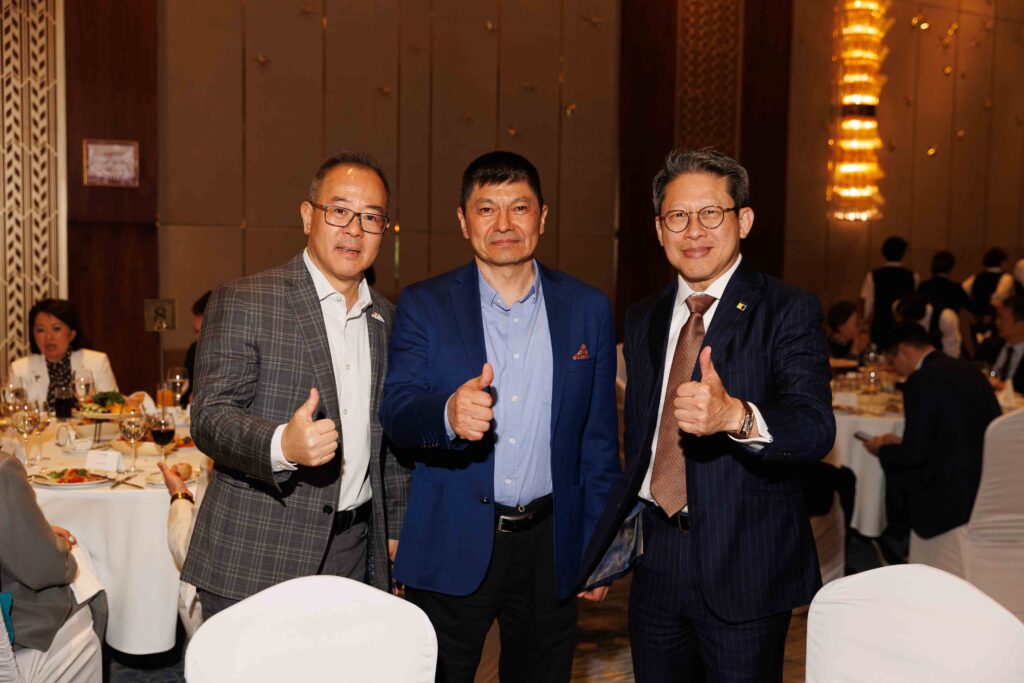
Why Central Asia is attracting attention
There are many more tourists coming to Kazakhstan and Astana today. When tourists come here, they often want to learn about the history of the Silk Road. When venture capitalists come here, we are looking at the future of the Silk Road. We want to invest in that future.
When I look at Kazakhstan and Central Asia as a whole, I do not see only the architecture or history. What excites me is the region’s young, highly educated population. People here are already mobile-first and increasingly AI-native. These entrepreneurs can build products not only for Kazakhstan’s population of around 20 million or Central Asia’s roughly 80 million people. They can build products for the global market.
The Greater Bay Area, for example, has a population of around 85 million. So Central Asia and the Greater Bay Area are comparable in scale, but both also have their own unique advantages.
I think Higgsfield is a great example of what can be built from this region. Higgsfield has done a very good job of connecting with Silicon Valley. We are interested in finding a company that could build a similar connection with Asia.
We see a lot of potential for two-way connectivity between Central Asia and Asia. There is also something that connects these regions historically. In Chinese, we have a phrase, you yuanfen, which refers to a meaningful connection between people or places. I found it interesting that Kazakhstan moved its capital from Almaty to Astana in 1997. The same year was significant for Hong Kong because it was the year of the handover. So there is an interesting connection between the two places.
There is another important connection. In 2013, President Xi Jinping announced the Belt and Road Initiative in Kazakhstan. Of all the places where it could have been announced, it was introduced here, at the heart of the historic Silk Road.
Gobi started in Shanghai and gradually expanded across Northeast Asia. We then entered Southeast Asia, where we now have seven offices across Singapore, Malaysia, Indonesia, Thailand, the Philippines and Vietnam. From there, we expanded into Pakistan, then the Middle East, which we refer to as West Asia, and now Central Asia.
Our goal is to connect these five regions and create greater connectivity between their entrepreneurs, technologies and capital.
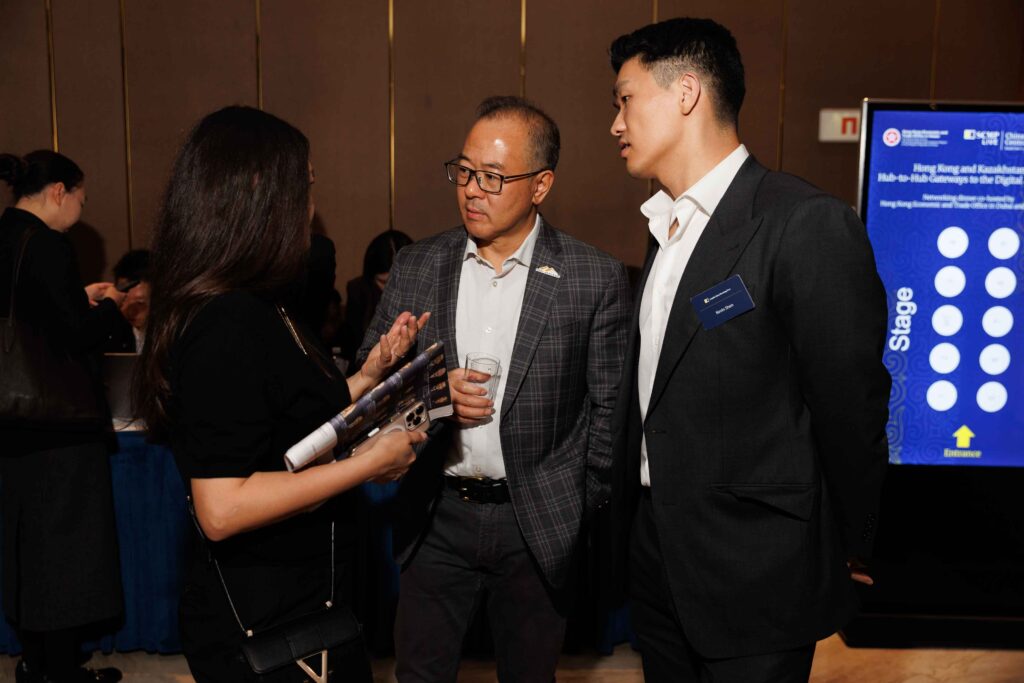
What is holding back investment
Gobi has a history of being a pioneer and entering markets where others do not yet see a clear path. We try to build that path.
When it comes to Chinese investment in Central Asia, I think the main barrier is perception and a lack of information. For a long time, many people in China were primarily focused on the West. They wanted to send their children to study in the United States or the United Kingdom, and in the process, they sometimes overlooked neighboring regions and the historical connections along the Silk Road.
I personally love martial arts, and if you read the works of the great Chinese author Jin Yong, many of his stories are connected to the Silk Road. So there has always been a cultural and historical connection, but over the past few decades, attention has been heavily focused on the West.
Given the current geopolitical environment, I think this is beginning to change. People are becoming more interested in neighboring regions and in understanding the opportunities that exist there.
This delegation, organized by Gobi together with the South China Morning Post and our other partners, can help increase awareness of Central Asia and what the region has to offer.
The more people understand the region, the more these historical connections can be renewed and translated into new business and investment relationships.
Kazakhstan as a regional connector
Kazakhstan has an important role because of its geographic and historical position. At Gobi, we believe strongly in connectivity. To me, Kazakhstan is similar to Hong Kong in this respect: both can serve as connectors between different markets. In addition to its young and highly educated population, Kazakhstan has access to several major markets.
First, many young people here speak Russian, which creates a connection to the Russian-speaking market. Despite the current circumstances, I believe Russia remains a large market opportunity in the long term.
Second, Kazakhstan has a natural connection to China.
Third, there is a connection to the United States and global markets.
And fourth, Kazakhstan’s Muslim population creates a potential connection to the global digital Muslim economy, which represents around two billion people.
That combination makes Kazakhstan quite unique, and it is one of the reasons we are here.
When we think about sectors such as smart logistics, Kazakhstan is particularly well positioned. The country has a natural role in the Belt and Road ecosystem and as a connectivity point between East Asia and Europe. If you look at the Middle East, Europe and East Asia, Kazakhstan has a very interesting geographic position. There are also opportunities connected to Kazakhstan’s traditional industries and accumulated expertise.