
Global VC. Nada Shaheen on corporate venture capital, Egypt’s startup rise, and why Central Asia is next

In Africa’s venture capital landscape, corporate investors are still a rare breed. But Nada Shaheen has spent the last five years changing that. As Managing Director of GB Ventures, the corporate venture capital arm of GB Corp, one of Egypt’s largest industrial groups, she has built a fund from scratch, backed a unicorn, and is now turning her attention toward new frontiers. She is the first Egyptian woman to lead a CVC fund in Africa, a serial entrepreneur, a mentor, and one of the most recognized voices on the continent when it comes to bridging corporates and startups. We sat down with Nada to discuss her journey, her investment philosophy, and what founders in Central Asia need to know.
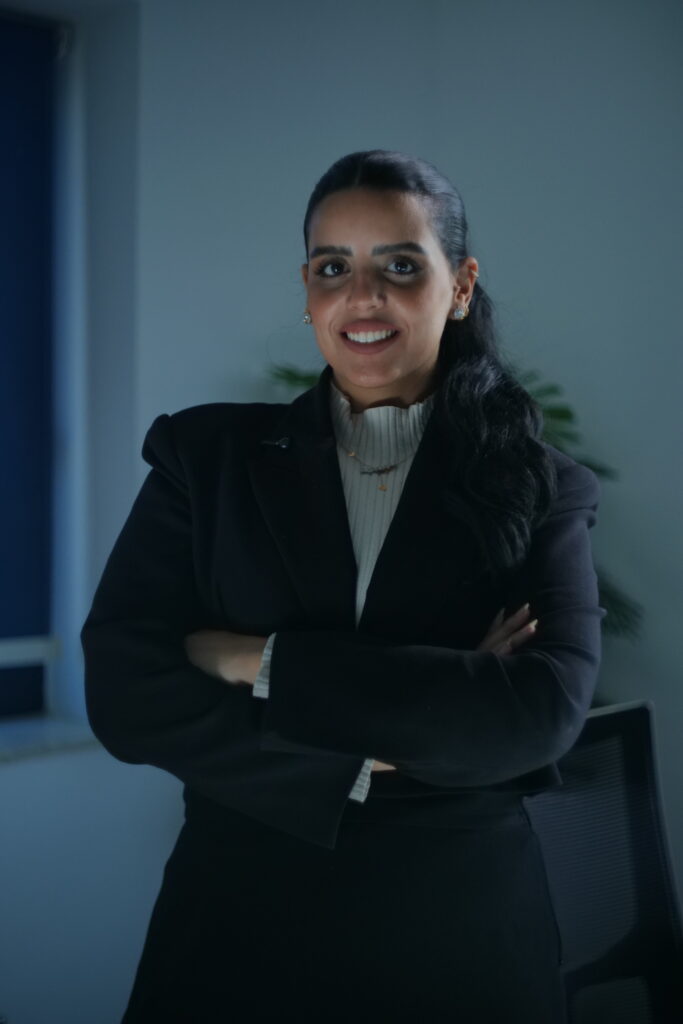
Nada Shaheen, Managing Director of GB Ventures, member of Global Women in VC, LinkedIn
About me
My journey into venture capital is really a story about following where the energy was. I have been part of the startup ecosystem since 2012, when I started as a founder and entrepreneur. I launched and ran co-working spaces for startups and freelancers in Egypt, which gave me a clear sense of early-stage founders, their needs and motivation.
Over time, I shifted toward investing and ecosystem-building. I worked with the Central Bank of Egypt on a national initiative to develop a strategy for investing in Egyptian startups and youth entrepreneurship. This initiative was a very important piece of building the early pipeline for the Egyptian market. I also worked on EU-funded programs supporting startups across Egypt and the Mediterranean region.
Eventually, I chose to work closely with the private sector on how to build investment strategies and integrate innovation through startup partnerships. That evolution brought me to where I am today: corporate venture capital is my area of focus. I guide corporates through the right mindset and strategy to build successful, long-term relationships with startups. GB Ventures is the platform where I get to put all of that into practice.
On investments
I have been actively investing in tech startups for five years. The investment that best illustrates what GB Ventures is about is MNT-Halan, which is now a unicorn. We invested in the early stages of the company, when they were still finding their footing. We believed deeply in the founder’s vision and capabilities. They were sharp and focused from day one.
MNT-Halan’s story was not only meaningful because of the financial return. We supported them strategically as well. This is where corporate venture capital can set itself apart: when a corporate backs a startup, the value goes far beyond the check. The resources, the commercial relationships, the market access, all of that can accelerate a startup’s trajectory in ways that a traditional VC simply cannot.
Across our portfolio, all five of our companies are profitable today, whether we are doing our job correctly.
The hardest challenge in investing in startups is not finding great companies, but working within the corporate structure while doing so. CVC is still new in Africa, and when I started GB Ventures four years ago, I had to spend significant time educating the board about what successfully investing in startups looks like. Corporates are naturally conservative and risk-averse. Getting them comfortable with the uncertainty inherent in early-stage investment takes time, patience, and a lot of proof points.
I addressed this within the corporate structure. GB Ventures is separated from the day-to-day corporate operation, but not isolated from it. That distinction matters enormously. If the corporate board is too involved in every deal, you lose speed and agility, which is what startups need. But if you are too disconnected, you lose the strategic alignment that makes CVC valuable in the first place.
On the investment side, the challenge is evaluating teams and ideas in markets that are still developing infrastructure and data you need to underwrite decisions. My approach is to run pilot integrations before fully committing. We sometimes spend three months with a startup, integrating them with one of our business lines, before we write the final check. It is slower, but it dramatically reduces the risk of backing the wrong team.
GB Ventures is a strategic fund. That means the first filter is always alignment. Does this startup operate in or adjacent to the sectors we care about: fintech, mobility, logistics, and automotive? We designed our investment focus to mirror GB Corp’s core businesses. Every investment should create commercial synergies, not just financial returns.
Within that, I look at the team first. I want founders who are bold and confident about their vision, but also self-aware enough to know what they do not know. A red flag for me is a founder who compromises their business model just to please an investor. That tells me they do not have enough conviction in what they are building.
Then I look at traction and maturity. We prefer Series A and above, where there is evidence that the product works and the unit economics make sense. I evaluate by benchmarking against comparable companies in the same market what equity stake is reasonable, what the valuation should reflect, and whether the strategic interest is strong enough to justify commitment.
On risk: I separate market risk, which I am comfortable with, from execution risk, where I need to see a team that has already demonstrated they can deliver. The pilot phase is our main tool for de-risking execution.

Geographic focus
We are always open to exploring opportunities in different markets, and part of our value proposition is precisely that we can bridge ecosystems by sharing our success stories, our networks, and our market expertise across regions.
I have personally visited Uzbekistan and spent time exploring the Central Asian startup ecosystem, and what I found was genuinely exciting. The dynamics remind me of Egypt eight to ten years ago: a young, digitally engaged population, strong government commitment to technology infrastructure, and a generation of founders who are building solutions for real, local problems rather than copying models from elsewhere.
We are actively planning to deepen our engagement with Central Asian startups. The potential collaborations between the two ecosystems are real — whether that is helping Egyptian companies expand there, or backing Central Asian founders who want to scale into the MENA region. Last year we were exploring both Africa and Central Asia, and the opportunities we found were significant. I would encourage any strong founders in the region to connect with us.
On startup and venture industry in Egypt
Egypt’s transformation over the past decade has been remarkable. When I started in this space, the conversation was still about whether venture investing could work in Egypt at all. Today, that question is definitively settled.
The fintech sector has led the charge. MNT-Halan reaching unicorn status is the headline, but the story goes deeper: we now have a generation of founders who have built, scaled, and in some cases exited businesses. The infrastructure supporting them, accelerators, angel networks, and later-stage capital from regional and global funds have matured considerably.
What excites me most is the corporate side of the story. Four years ago, nobody in Africa was seriously talking about CVC. Today, I am helping companies like Bosch design their own corporate venture programs. Egyptian corporates are creating their own funds. The mentality is shifting because people have seen proof that the model works. That is an ecosystem signal I take very seriously, when corporates start moving, capital flows accelerate.
The lesson I draw for Central Asia: ecosystems do not wait for permission. They tip when enough bold founders start building and enough investors decide to back them.
Post-investment support
The most immediate support we give is commercial integration. We integrate our portfolio companies directly into GB Corp’s business lines, making them vendors, partners, or clients of the group. That means they get a large corporate customer, market credibility, and real revenue from day one. It also means they benefit from our distribution and client networks across Egypt, Jordan, Iraq, Kenya, and Tanzania.
Beyond that, our founders have direct access to GB Corp’s C-suite, board members, and VPs for mentorship and strategic advice. That kind of access is something most startups spend years trying to build. We hand it to them on day one.
We also actively facilitate investor introductions to help our companies raise follow-on rounds, and we have quarterly reviews with every portfolio company to track their KPIs and identify where we can accelerate their growth. As long as a company is strategic and performing well, follow-on investments can reach up to $5 million.
Investment size
Our ticket range starts at $1 million and can go up to $5 million in follow-on rounds. We prefer Series A and above companies that already have some traction and operational maturity.
How we size a specific investment comes down to three inputs: the startup’s financials and future projections benchmarked against comparable companies in their market. The equity stake we want to acquire and the strategic value the startup brings to our business. These three inputs give us a valuation anchor and a ticket size that makes sense for both sides.
Structurally, we always seek a decent minority stake. We take board seats in all our portfolio companies, which reflects the seriousness of the relationship. Our investment decisions go through an investment committee composed of the relevant business-line CEOs and me from GB Corp, so there is always a strategic sponsor inside the corporate for every deal we make.
On timeline: we build long-term relationships with our startups. As long as they are growing well and remaining strategically relevant, we continue to back them. We are also open to acquisitions at some point for the right companies.
We have not exited any of our portfolio companies yet. We are five years in and still in a building phase with all of them. Our approach to CVC is fundamentally long-term. When we make an investment, we are not thinking about exits in the first three to five years. We are thinking about how deeply we can integrate this company into our ecosystem and how much we can accelerate their growth.
That said, we are building relationships with VC partners that will give us cleaner exit pathways when the time is right. Occasionally, we will dilute our stake when strong co-investors come in, which is a natural part of the lifecycle. But for now, exit planning is not what drives our decisions, value creation is.
Investor’s advice
My most important piece of advice is this: do not try to please investors, but work with them. Too many founders focus on what they think investors want to hear instead of building a company with a real loyal customer base. When you have that, you will attract investors naturally and from a position of strength.
On preparation, you need to know every number in your business in detail. Revenue, burn rate, unit economics, customer acquisition cost, churn. If you are fumbling with these in a meeting, you are not ready to be in front of investors yet. Prepare your pitch deck and your data room before you start the process. When an investor shows interest, momentum matters. Delays kill deals.
On finding the right investors: do not spray and pray. Research who invests in your sector, stage, and geography. Look at their track record and their portfolio reputation. Reaching out to everyone is a waste of time and a waste of credibility.
I always tell founders: start building relationships with investors early, before you need the money. Never go shopping when you are hungry. Attend ecosystem events, share what you are building without hard-selling, and get warm introductions through mutual connections. The quality of your first impression with an investor matters enormously.
And finally, treat this like a marriage. You are inviting someone to share your dream and your business. You should have mutual values, mutual respect, and a shared vision for what the company can become. The wrong investor at the wrong moment can be more damaging than no investor at all.
Plans
Our primary focus at the moment is on deepening the commercial integration of our existing portfolio companies within GB Corp’s business lines. The model is working, and we want to maximize the value of what we have already built before we expand.
In parallel, we are finalizing a new fintech investment in Egypt. Fintech remains the sector with the most structural opportunity in emerging markets. The infrastructure gaps are real, the addressable market is enormous, and the regulatory environment in Egypt has matured enough to support ambitious companies in this space.
Our next target markets are not publicly disclosed yet, but I can say that Central Asia is firmly on our radar. During my visits to the region, including Uzbekistan, I found a level of energy and founder quality that I was not expecting. The ecosystem is earlier-stage than Egypt’s, but that is exactly where the interesting opportunities are before the market gets crowded.
My broader vision for GB Ventures is to show that corporate capital, deployed with the right strategy and the right relationships, can be one of the most powerful drivers of startup growth in emerging markets. We are still early in that story, and the most interesting chapters are ahead of us.